Click here to read the entire
Trust document
The Alcor Patient Care Trust
In the early days of cryonics, patient storage was paid for by periodic payments
from still-living relatives. This system simply did not work, and resulted in
the loss of a number of patients but never at Alcor.
At Alcor, patient storage costs are paid from the Patient Care Trust Fund.
This conservative funding arrangement is designed to cover the cost of patient
storage solely from the income from the Trust, thereby assuring that such funding
will continue indefinitely into the future. The irrevocable Patient Care Trust
is included under Alcor's tax-exempt status, but nevertheless is a separate
legal entity that provides liability protection for these assets. This arrangement
is one of the reasons our members have confidence in Alcor.
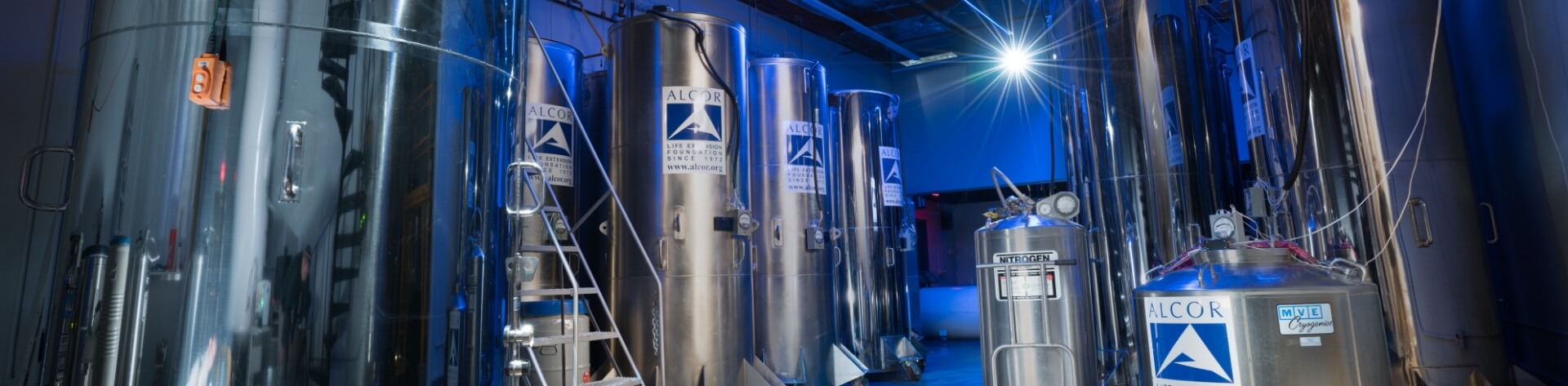
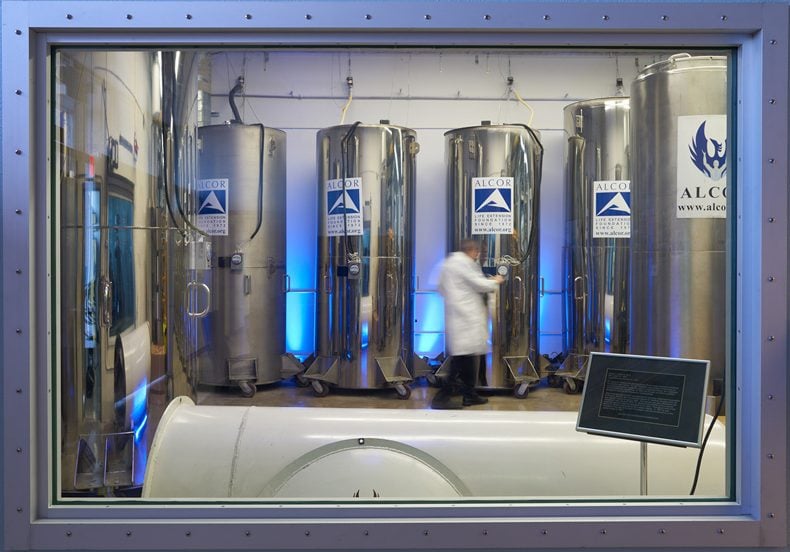
It doesn't do any good to use the most advanced techniques to get our members
into cryopreservation unless we can keep them there. Ongoing care for
cryopreservation patients is the number one element of our purpose in being
cryonicists, and financial protection for the patients is a critical
component of this. There is no use in starting this possibly centuries-long
project, if we don't do centuries-long financial planning. Providing this kind
of protection through a conservative, long-term view of storage costs is one
of the main reasons why cryopreservation costs so much.
When an Alcor member is cryopreserved, a significant portion of the member's
funding is placed into the Patient Care Trust $65,000 for each whole-body
patient and $25,000 for each neuropatient. The investment income from this money
is then used for the ongoing storage costs. Alcor accepts only secure funding
arrangements where the entire funding amount is available within a few days
after the legal death of the patient. Most people arrange this through a simple
life insurance policy, with Alcor as the beneficiary, although other arrangements
are possible.
Because of our non-profit 510(c)(3) charitable status, Alcor does not keep
separate funding accounts by patient. All patient care funding is grouped together
in the Patient Care Trust so that all patients are treated equally (with the
exception of the inherent differences between whole-body patients and neuro
patients).
Creating the Alcor Patient Care Trust
The Patient Care Fund (before it was a separate Trust) was originally part
of Alcor's regular internal fund accounting system. By late 1991, this fund
approached one million dollars and was by far the largest segment of Alcor's
assets. The Alcor Board realized that a better way was needed to protect this
money. For one thing, it was a possible "deep pocket" in any potential
lawsuit against any part of Alcor's operation. For another thing, there
was the potential temptation to raid the fund for other purposes during tight
financial times. So the idea was born to create a legally separate Trust to
shield the fund from either of these possibilities.
A trust is a legal device by which property is held by one person
(the trustee) for the benefit of another (the beneficiary).
The person who sets up the trust is called the settlor. The property
that is held in trust is known as the corpus or trust fund.
-- Brown, Byers, Lawler. Business Law (Macmillan/McGraw-Hill,
seventh edition, 1989) |
Creating the Trust turned out to be much easier said than done, and the process
ended up taking almost eight years. The unique business Alcor was in necessitated
the breaking of new legal ground in creating this Trust. For one thing, although
the patients are supposed to be the true beneficiaries of the Trust, the patients
have no legal existence and hence could not be the beneficiaries (instead, Alcor
was made the beneficiary).
Over a period of nearly four years, Alcor consulted with several expert trust
attorneys who did nothing more than educate Alcor on the difficulty of creating
this Trust. Finally, in 1995, Alcor found an Arizona trust attorney, Larry Stevens,
who was willing to take on the task. "Yes, this can be done" he said,
"but it will require some unique legal thought." Alcor needed to write
much of the Trust itself because only Alcor could understand what it wanted
to accomplish, and there was a lot of internal debate on exactly how to do that.
Within the next three years, the final draft of the Trust was written by attorney
Larry Stevens and former Alcor President Steve Bridge, with input from Alcor
Board members, various attorneys, and other thoughtful reviewers.
In May, 1997, the original Trust document was approved unanimously by the Alcor
Board of Directors and the five original Trustees. The final amendments made
in 1999 were also approved unanimously by both the Alcor Directors and the Trustees.
The Trust Document
You can read the entire Alcor
Patient Care Trust document in the Library section of the website. Below
are a few highlights of how the Trust operates in practice.
- As of May 1999, the Trust is irrevocable. This means that the Alcor Board
cannot ever cancel the Trust until the purposes of the Trust are fulfilled.
Since the purposes of the Trust can be summarized as "keep all the patients
in cryopreservation until they can all be repaired and revived," this
Trust is going to be in existence for a long time.
- The Trust Board consists of five persons, all of whom must be cryopreservation
members of Alcor. One and only one Trustee must be a member of Alcor's Board
of Directors. Three of the Trustees must have a relative or significant other
currently in cryopreservation.
- The members of the Trust Board are appointed by the Alcor Board of Directors.
They have five year terms, staggered so that one term expires each year. If
a suitable person who has a relative in cryopreservation cannot be found, a Temporary
Trustee with a term of up to one year can be appointed who is not a relative
(so far this has not occurred).
- No Trust Board member may be an employee or officer of Alcor, or receive
any compensation from Alcor or the Trust other than expenses incurred by carrying
out duties involved in managing the Trust.
- If the income from the Trust in any given year exceeds by 30% the actual
patient care expenses for that year, the additional income above that 30%
can be placed in a separate account to fund research in procedures to revive
the patients. If the repair and revival of patients ever becomes feasible,
the Trust may expend whatever amount is necessary to accomplish this, provided
it is done in such a manner as not to jeopardize the care of any patients
remaining in biostasis.
- Each month, Alcor bills the Patient Care Trust for Alcor's expenses related
to patient care. The specific costs related to patient care are itemized according
to a formula mutually agreed upon by Alcor and the Patient Care Trust. According to the current formula, the Trust pays for all direct liquid nitrogen costs plus
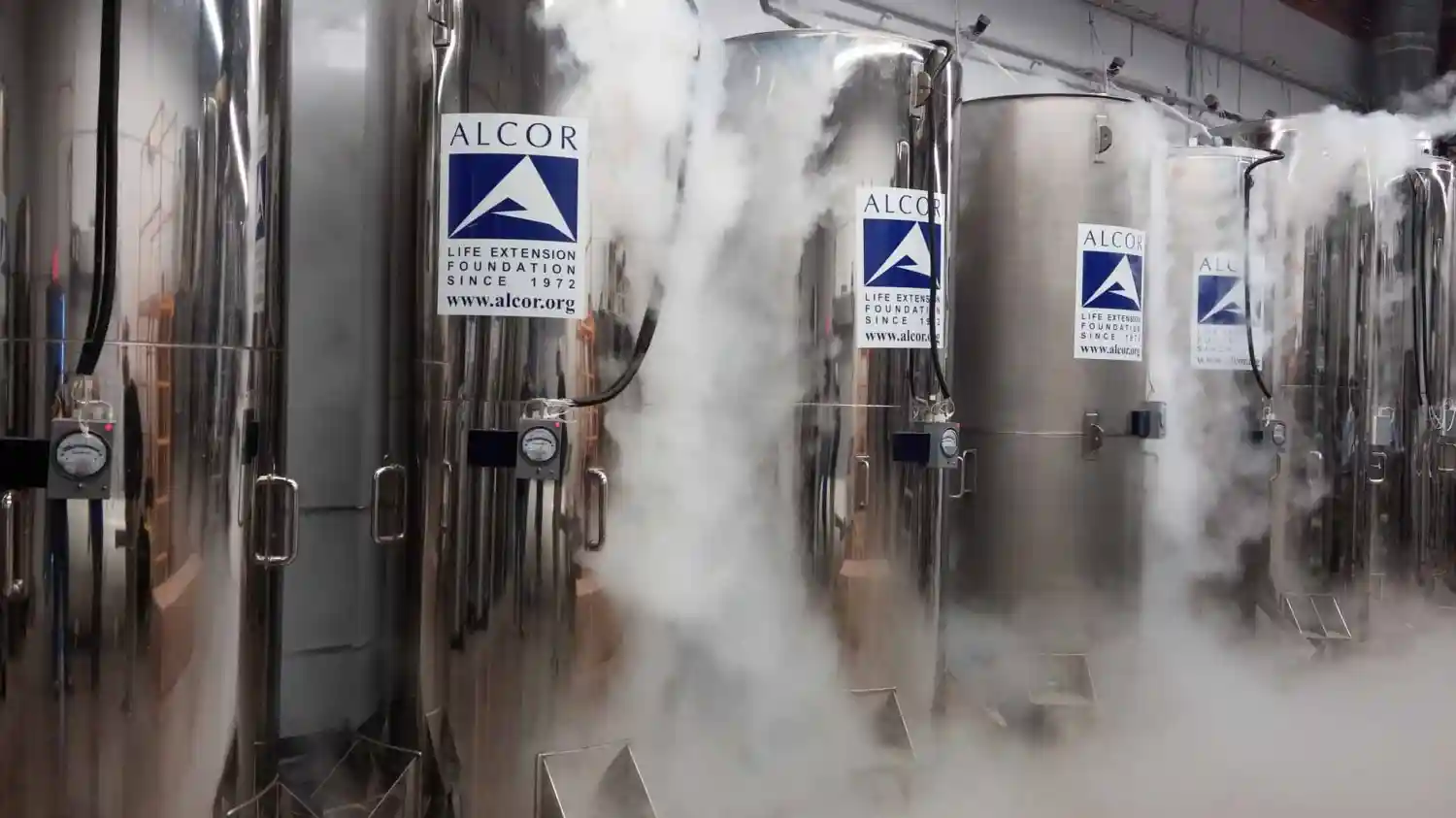
an allocated percentage of staff cost applied to general overhead (currently set at 9.4%). In addition, the Trust pays for direct capital expenditures related to patient care, such as dewars and construction work on the Patient Care Bay.
Trust Assets
As of January 31, 2008, the Alcor Patient Care Trust Fund has assets of 3.2
million dollars, invested as follows:
- The Patient Care Trust owns well over 50% of the shares in Cryonics Properties,
LLC, the limited liability company that owns the Alcor building (all other
shares are owned by Alcor members). The Trust also owns the mortgage on the
building. Alcor pays rent to Cryonics Properties, LLC. Since Alcor does not
occupy the entire building, there are additional tenants who also pay rent.
- The remaining Trust assets (about $1.7 million) are invested in a diversified
portfolio professionally managed by the investment firm of Morgan Stanley.
A testimonial by attorney Gary Meade
As an attorney as well as an Alcor member and someone who has a loved
one in cryopreservation, I am pleased to give my wholehearted professional and personal
endorsement of the Alcor Patient Care Trust. I believe the Trust will provide
the best means of legally protecting the patient care fund assets, thereby
helping to ensure the long-term care of the patients in cryopreservation. That is
the reason I enthusiastically agreed to serve as a Trustee and Chairperson
of the Trust [from 1997 to 2002].
Conceptually, the Trust is an excellent idea. The assets in the patient
care fund have been placed in trust, to be held by the Patient Care Trust
as a separate legal entity. This will provide the maximum legal protection
for these assets, both against claims by others as well as possible misuse
for purposes other than patient care. The Trust Agreement requires the Trustees
to act in accordance with the Trust's legal purpose, which is "providing
care" for the patients in cryopreservationMtr1daat. The Alcor Life Extension Foundation
is the legal beneficiary of the Trust, and as such has the absolute legal
right to enforce the Trust Agreement and ensure that the Trustees act in such
a manner.
The Trust itself is well-planned and skillfully crafted. This is the first
trust ever established to care for those who are legally dead and who therefore
have no rights under the law. This presented some novel legal challenges.
The drafters of the Trust overcame these and I believe the completed Trust
successfully accomplishes everything it was intended to do.
Everyone with an interest in cryonics owes a tremendous debt of gratitude
to those who worked so hard to set up the Trust, including the outside trust
counsel, the Alcor Board, and especially Steve Bridge. Of course, those having
the greatest such debt are the patients themselves. It may be presumptuous
of me to do so, but I would like to extend on their behalf a most sincere
"Thank you" to all for a job very well done.
Click here to read the entire
Trust document
|